April 10, 2004
Private Contractors vs. the Iraqi Insurgency

The murder of four civilian military contractors employed by Blackwater Security Consulting in Fallujah, Iraq recently, pointed up the presence of what is arguably the second largest military force (aside from U.S. military forces) in-country. Real questions are arising as to whether the U.S. is using civilian contractors as a means to limit the number of American troops on the ground, but at the same time, their presence creates major risks - both for contractors themselves, the Coalition Provisional Authority and their military counterparts. On top of this, the much better salaries commanded by private security personnel are attracting lots of special ops corps once they leave regular G.I. service.
Here's an excerpt from a Slate piece on how to define these personnel - mercenaries, noncombatants, lawful combatants or what?:
- Practically speaking, this legal murkiness creates real problems in Iraq. The law of armed conflict requires soldiers on both sides to distinguish between combatants and noncombatants. Armed U.S. contractors wearing quasimilitary outfits and body armor blur these distinctions, making it very hard for our enemies to play by the rules of war (assuming they wanted to in the first place). It also leaves these armed contractors open to treatment by foreign governments as unlawful combatants, U.S. citizenship notwithstanding. Should a group of armed contractors stray into Syria or Iran because of a GPS malfunction, it is entirely possible that they'd be locked up on these grounds.
Meanwhile, contractors from Blackwater held off an attack on U.S. headquarters in Najaf last Sunday:
- An attack by hundreds of Iraqi militia members on the U.S. government's headquarters in Najaf on Sunday was repulsed not by the U.S. military, but by eight commandos from a private security firm, according to sources familiar with the incident.
Before U.S. reinforcements could arrive, the firm, Blackwater Security Consulting, sent in its own helicopters amid an intense firefight to resupply its commandos with ammunition and to ferry out a wounded Marine, the sources said.
The role of Blackwater's commandos in Sunday's fighting in Najaf illuminates the gray zone between their formal role as bodyguards and the realities of operating in an active war zone. Thousands of armed private security contractors are operating in Iraq in a wide variety of missions and exchanging fire with Iraqis every day, according to informal after-action reports from several companies.
In Sunday's fighting, Shiite militia forces barraged the Blackwater commandos, four MPs and a Marine gunner with rocket-propelled grenades and AK-47 fire for hours before U.S. Special Forces troops arrived. A sniper on a nearby roof apparently wounded three men. U.S. troops faced heavy fighting in several Iraqi cities that day.
The Blackwater commandos, most of whom are former Special Forces troops, are on contract to provide security for the U.S.-led Coalition Provisional Authority (CPA) in Najaf.
With their ammunition nearly gone, a wounded and badly bleeding Marine on the rooftop, and no reinforcement by the U.S. military in the immediate offing, the company sent in helicopters to drop ammunition and pick up the Marine.
Finally, in a fascinating piece on recent developments, the Washington Post reports that, in light of the fact that private firms realistically cannot rely on U.S. military help if they get in a jam, they've teamed up to form their own intelligence network and alliances to watch one anothers' back:
- Under assault by insurgents and unable to rely on U.S. and coalition troops for intelligence or help under duress, private security firms in Iraq have begun to band together in the past 48 hours, organizing what may effectively be the largest private army in the world, with its own rescue teams and pooled, sensitive intelligence.
"Each private firm amounts to an individual battalion," said one U.S. government official familiar with the developments. "Now they are all coming together to build the largest security organization in the world."
Whatever the case, it's certainly the right time to be in the military consulting business.
- Arik
April 09, 2004
Gator Remakes Itself as Claria: Can a Fresh Coat of Lipstick Make a Spyware IPO Succeed?
 Not many people remember Claria by its original - and far more controversial - moniker of Gator... all except the bunch of companies still suing their pants off for unfair competition, unfair trade and violation of trademark and copyright. Essentially, Gator's business had been to redirect traffic from the site a Web surfer intends to visit to that of a competitor (and Gator client).
But Gator had an image problem. They were considered underhanded - the name Gator and the logo that went with it certainly gave an impression they were proud of that rep.
But, Gator's re-christening as Claria is made complete by the IPO filing - here's an excerpt from the ClickZ network:
- Controversial ad-supported software player Claria, formerly known as Gator, filed for an initial public offering with the Securities and Exchange Commission (SEC) this week. The company is hoping to raise $150 million.
Claria had net income of about $35 million on revenue of $90 million in 2003, according to documents filed with the SEC. Despite the controversy, the company's filings also reveal it has won over well-known brands and well-respected names in the Internet advertising industry.
In 2002, Avenue A accounted for 21 percent of the company's revenue. In 2003, Yahoo!'s Overture Services helped Claria bring in 31 percent of its revenue, through a deal to syndicate Overture listings through Claria's SearchScout software.
But Claria noted that new state laws, proposed federal legislation and lawsuits against it may hamper its future.
The company's business model involves distributing its advertising software by bundling it with other applications -- both its own and third-party software. (It gets a significant amount of distribution through bundling with Sharman Networks' Kazaa.)
Once the "adware" is installed, Claria is able to observe users' surfing behavior. It uses that behavioral information to target ads, which pop up while users are surfing Web sites. That tracking of surfing behavior, and Claria's past questionable distribution practices -- which it insists it has since given up -- have given the company a bad reputation with some privacy advocates and some consumers.
Still, some believe the disclosure requirements that come with being a public company will help legitimize the "adware" sector as a whole.
"Claria going public will pull away the veil of secrecy and mystery that surrounds the whole [adware] industry," said Gary Stein, analyst for Jupiter Research, owned by the parent of this publication. "Mainstream advertisers have long wanted to do behavioral advertising, but hesitated because they weren't sure how to do it. As these companies shed their negative images, behavioral advertising will come into its own."
Stein admitted the company faces some challenges, however.
Most notably, Claria faces legal problems. The company has been involved in a great deal of litigation. In fact, the company's list of pending civil suits includes cases involving the Hertz Corporation, L.L. Bean, Six Continent Hotels Inc. and Inter-Continental Hotels Corporation, TigerDirect, True Communication, Wells Fargo & Company, WFC Holdings Corporation and Quicken Loans. The primary allegations against Claria are that it violates trademarks and copyrights, and engages is unfair competition and unfair trade practices.
"There are risk factors, just as there are with any company. It is significant that Claria is involved in lawsuits that threaten the very nature of their business," Stein said. "But they have a good solid legal department and are trying to change opinions about their company."
New state legislation and pending federal legislation also pose risks, the company noted in its filing. Last month, U.S. Sens. Conrad Burns and Barbara Boxer introduced legislation to prohibit spyware, adware and other intrusive software. The proposed act, known as Spyblock, would make it illegal to install software on a user's computer without notice and consent. Also, Utah recently passed an anti-spyware law that will prohibit the company from operating in that state.
Claria has worked to clean up its image. Among other things, the company changed its name from Gator to Claria in late 2003. It's been successful in attracting big name advertisers to its GAIN Network.
According to the company, its direct and indirect customers in 2003 include about 425 advertisers. Cendant Corp., FTD.com, Netflix and Orbitz are among them.
"When you talk to media buying companies, they love Claria. They're happy to use them because they get great results," Stein said. "Only 10 percent of ad agencies are using behavioral advertising, but 50 percent are optimistic about using it in 2004."
Whether Hertz or Wells Fargo will succeed in their legal actions is somewhat less important than what law comes out at the state and federal levels. If their business model is made illegal, it's a rotten investment by any estimation.
- Arik
April 08, 2004
Air America vs. Right-Wing Talk Radio

Left-of-center radio network, Air America, lifted off the first of this month, and was promptly praised by liberals, largely panned by critics and ignored by conservatives. Slate's Ben Williams recapped the critiques in his column, Summary Judgment:
- "Rush Limbaugh can sleep soundly. For now," said the Minneapolis Star-Tribune after this liberal talk radio network's debut. Critics agreed that Al Franken, who leads the programming, needs to sharpen up: Howard Kurtz called him "meandering and discursive," the Boston Globe said "he is not a good interviewer," and the New York Times thought his mix of "mockery and mild indignation" proved the difficulty of matching "the fervor and ferocity of right-wing radio." Right-wing radio hosts were happy to agree: Jay Severin claimed "audience demographics" would be "the death knell" for liberal talk, and in the Los Angeles Times, Richard A. Viguerie and David Franke questioned Franken's commitment (he has a one-year contract), reminding that the conservative talk empire "was the result of decades of hard work." Franken did win praise for high-powered guests but the New Republic noted that it "doesn't bode well" when a show's "most entertaining segment is one featuring Al Gore."
What was more interesting for me was how other liberal media tried to rally around and lend support and encouragement to get people to tune in. AlterNet featured a story from Rachel Straus practically pleading with lefties to listen in:
- Air America recognizes that it needs to capture and exploit more than Americans' anger about the war on Iraq and other Bush administration policies. "It's got to be entertaining," says executive director Mark Walsh, who advised Senator Kerry and the Democratic National Committee on Internet issues.
But being witty, let alone politically incisive, on live radio isn't easy. It requires the kind of genius where a lone voice successfully conveys a powerful persona. Don Imus saturates the airwaves like a disembodied Elvis; Franken, so far, sounds like a cranky kid. (He does, however, do a great imitation of Secretary of Defense Donald Rumsfeld.)
Disappointment in Franken's early performance has been duly noted in the press, and conservative media insiders are already making wagers on Air America's demise. What hasn't been emphasized is that almost everything is riding on Franken's success. He is the spokesperson for the first all-talk progressively tuned radio network.
The company has not met its publicized goal to own five radio stations by its first live broadcast and instead leases six stations nationwide. Air America's has found some security with XM Radio Satellite, which carries the network and has 2.6 million subscribers. The network needs to capture at least 2 percent of the listening audience to be considered a "player," according to Talkers magazine publisher Michael Harrison. By the time Air America's ratings come out in July, Franken will have hopefully found his groove.
Al Franken, a former high school wrestler, knows a thing or two about struggle. He'll be working out the kinks in his show, not just to turn his nemesis Limbaugh face down on the political mat but to elbow out some of the country's right-wing talk radio predominance. As veteran New York taxi driver Daniel Frimpang put it, Americans need a different big fat radio presence, one that will speak "for the rest of us."
I (sort of) hope they make it - I've been listening on the Web a bit and have been pretty unimpressed, but it is nice to have a little rivalry with the rather more agile competitors on the right. In the crucible that is the marketplace of ideas, we'll see if Air America can get its act together before ratings season hits in a couple of very short months.
- Arik
UPDATE (Thursday 16 April 2004): The fledging network, two-weeks old, was yanked Wednesday in Los Angeles and Chicago; the nation's second and third largest media markets. The owner of these stations, WNTD 950 AM in Chicago and KBLA 1580 AM in L.A., said Air America bounced a check and owes his company more than $1 million. Air America executives denied breaching financial obligations, said the network's absence is temporary and pledged to pursue relief in court if necessary. General counsel David Goodfriend characterized what happened as a contract dispute over the station in Los Angeles.
April 07, 2004
Wal-Mart’s Supercenter Defeat in Inglewood: Can the Company be Stopped by Union-Backing California Shoppers?
 Wal-Mart's recent defeat in a referendum to build a new Supercenter in Inglewood, California hasn't deterred the company from expanding its business in California and putting more pressure on grocers, despite pressure from union-supported opposition groups and even local politicians. Here's an excerpt from April 7th article in the North County Times:
- The world's largest retailer spent more than $1 million to try to sway residents in the Los Angeles suburb of Inglewood to approve its ballot initiative clearing the way for a new store, but it lost the vote.
Tuesday's defeat represents at least the second time a majority of voters in a California community has blocked Wal-Mart's efforts. Last month, residents in San Marcos forced a referendum on a City Council decision to approve a new Wal-Mart store, and ultimately overturned it.
On Wednesday, the company downplayed the outcome of the Inglewood vote, saying it would not affect its strategy to open 40 of its hybrid grocery store and Wal-Mart Supercenter stores in California during the next four to six years.
"We've got a lot of things going on in the state. Inglewood was not our only interest," said Bob McAdam, Wal-Mart's vice president of corporate affairs. "That program continues moving forward. ... I don't see this deterring us from reaching our goal."
Critics of Bentonville, Ark.-based Wal-Mart Stores Inc. say the company's stores, particularly its roughly 200,000-square-foot Supercenters, lead to jammed roads and worsen suburban sprawl. Others, specifically labor unions, say Wal-Mart stores only create low-benefit, low-wage jobs and its low prices drive smaller competitors out of business.
The company rejects those criticisms, saying its stores help drive competition to the benefit of consumers and help attract other businesses, which leads to more jobs.
Wal-Mart has faced steady opposition throughout the United States, and California has been no exception, particularly since the company announced in 2002 its intention to expand its Supercenters here.
"We have challenges across the country, but I would say that it's perhaps more pronounced here in California," McAdam said.
The 4 1/2-month-long labor dispute by Southern California grocery workers focused unabashed public criticism by the workers' union and the supermarkets against Wal-Mart.
That sentiment lingers in union-strong areas of the state and remains an influential issue with many elected officials. In Los Angeles and other municipalities, city officials are considering or have passed ordinances to block the warehouse-sized stores.
"There is something brewing here, which is about holding Wal-Mart accountable," said Madeline Janis-Aparicio, executive director of the Los Angeles Alliance for a New Economy, which helped lobby residents of Inglewood to reject the Wal-Mart ballot initiative.
"The effort to stop them cold has not been successful. The effort to hold them accountable is gathering steam," Janis-Aparicio said. "They're in California, but they're not in firmly with both feet."
This could impact Wal-Mart more negatively than one might think, if the win bolsters opposition groups elsewhere and might even cause Wal-Mart to miss five-year goal of building another 40 Supercenters in the state. Apparently, when the grassroots go against you, "always low-prices" can't always ensure victory.
- Arik
April 06, 2004
Gateway Closes Retail Operations, Reflecting Influence of Acquired eMachine’s Management

By the end of April, Gateway will close down its 188 retail stores and lay off 2,500 employees as the shakeout of the acquisition of eMachines continues, even while the company hopes to expand its retail distribution options both in the United States and around the world as their own stores are shuttered.
I expected such a move to occur sooner than later, as the $290 million merger was consummated by last week's executive reshuffle that saw most of the management team taken over by former eMachines staff. Here's an excerpt from eWEEK.com:
- As part of the acquisition, Gateway founder and CEO Ted Waitt stepped aside and let eMachines CEO Wayne Inouye assume the post. Waitt will remain as chairman.
Last week, Gateway announced a new management team populated primarily by eMachines executives. At the same time, the company announced that several of the executives brought in by Waitt over the past year would leave Gateway.
Earlier this week, the company announced it was moving its headquarters from Poway, in suburban San Diego, to Orange Country, near eMachines' former Irvine, Calif., base.
Industry observers had said even before the acquisition that Gateway's stores were a double-edged sword for the company. While they offered a place for Gateway to demonstrate its wares, they also represented an expense that many competitors, such as Dell Inc. didn't have to carry.
Gateway had closed about 90 stores over the past couple of years as it struggled to return to profitability, but last fall it unveiled the first of its refurbished stores.
Gateway executives at the time said the stores played a critical role in the company's push to move beyond its PC making routes and into the role of a systems integrator, offering a wide array of consumer electronics, from digital cameras and personal digital assistants to plasma TVs. The stores also represented a way of displaying its growing list of enterprise products, such as servers and storage devices.
In December 2002, Gateway started a program in which the combined computing resources of the thousands of PCs displayed in the stores—most of which sat on shelves unused—were pooled together to create a grid. Customers could access the compute power to run data-intensive applications.
At the time of Gateway's purchase of eMachines, both Waitt and Inouye touted the synergies that would be realized by combining Gateway's direct sales model with the indirect model of eMachines, which sells its products though such retail outlets as Best Buy and Circuit City. Following the announcement, many retailers that sold eMachines products reacted negatively, complaining that they would have to compete against the Gateway stores.
However, at the January briefing with reporters and analysts on the deal, Waitt was questioned repeatedly on that indirect model's impact on Gateway's own retail stores. There were no plans to start selling eMachines products in Gateway's stores, he said. "We're going to try to minimize any conflict between those two" sales channels, Waitt said at the time.
In the words of analyst Rob Enderle: "This remains a textbook approach to a leadership problem; bring in a new team, intact, so that they can hit the ground running. The announcement of the closure, the layoffs, and the executive office move is consistent with a team that doesn’t need to figure out the landscape before making critical decisions." In that respect, Gateway is set now to pull away from its troubled recent past. Hard decisions are made all the more important when the management team has the intestinal fortitude to acknowledge past problems and fix them. Ted Waitt couldn't do that; let's hope Wayne Inouye can.
- Arik
April 05, 2004
Rich Guys, Fame & Reality TV

What do these three guys have in common?
Yeah, they're all really rich. They've all got crazy hair. They're all opinionated. But, you might not have known they all want to be stars. Famous. As if they're not already... at least for being rich if nothing else and they have some celebrity status that they hope to parlay into something even bigger. They're all attention-seekers, to be sure. They've also decided reality TV is one way to get more of it. And, following the success of Donald Trump and "The Apprentice", they're not far off.
Trump whole career and life itself (see this great Fortune article) are singularly focused on building a brand around his name and using personality to get bigger and better deals.
Trump’s salary is supposed to “at least double”, from its current $50,000 per episode. ;-) Of course, that doesn't count his merchandise or production cut from the show, which is certainly many times more than that, or the gazillions saved in public relations. All in all, it's a pretty good deal for rich folks that need to build their fame.
According to Reuters, Branson's show promises to be more fun:
- Mixing a bit of "Around the World in 80 Days" with Trump's hit reality series "The Apprentice," broadcaster Fox on Thursday said it has signed a deal with Branson, founder of the Virgin Group, for a new U.S. television series tentatively called "Branson's Big Adventure."
The new series featuring the flamboyant billionaire impresario, best known to the American public for stunts like trying to circle the world alone in a balloon, is expected to debut later this year.
Fox, a unit of News Corp. Ltd., said Branson will take "a select group of America's best and brightest" around the world, reliving his experiences and dealing with business dilemmas. Each week, the network said, one contestant will be left behind while the others continue to globetrot.
But, the Motley Fool was skeptical of the concept:
- This isn't necessarily what the world of network TV needs right now - another show based on the concept that affluent cultural icons will dole out draconian tasks to unwitting players to see who can survive an embarrassing evaluation. To be sure (and fair), the show has yet to be fully developed, so that is nothing more than a guess as to its ultimate hook. But we can take a good stab at what it will be; after all, the show can't be boring. Good reality TV is 10% quality and 90% (contrived) drama, and if the angry-mentor antics of Simon Cowell on Fox's American Idol and Donald Trump on NBC's The Apprentice are any indication, we can expect at least a few uncomfortable moments of competitors trying to avert eye contact with their leader.
Still, it's undeniable, "Apprentice" has helped NBC's Thursday night and aspiring young Trumps can always catch the rebroadcast on the more-staid CNBC later in the week.
Meanwhile, Mark Cuban, arguably the luckiest dot-com billionaire out there, having sold out to Yahoo at the top of the bubble and then turned around to invest in a pro basketball team, has plans of his own:
- More than 500 people eager to win $1 million from Mark Cuban attended an open casting call for the Dallas Mavericks owner's upcoming reality television show.
Sixteen people will be chosen from auditions in five cities and from submitted video applications. But there's still no word on what it will take to win the money on the ABC show "The Benefactor."
"It's like 'Willy Wonka & the Chocolate Factory,'" Cuban told the Dallas Morning News for its Sunday editions. "When you walked into Willy's factory, you had no idea what the game was."
Contestants will live in a Dallas house for three weeks and participate in activities Cuban devises.
"The game is: What's Mark looking for?" executive producer Clay Newbill said. "Mark Cuban is our show."
Taping is expected to begin this month with the show's eight episodes expected to air in August or September. Newbill said the show is in negotiations for the house that contestants will live in, but he wouldn't reveal its location.
How far can this go? Are we gonna see Carly Fiorina or Barry Diller or Steve Ballmer with their own reality shows? Heck, even I would probably tune in and watch the two-hour finale at least... I've watched a lot more "Apprentice" than I ever thought I would… but, it’s still not what I’d call must-see TV.
- Arik
April 04, 2004
Tyco Fraud & Corruption Charges Against Kozlowski & Swartz Ends in Mistrial
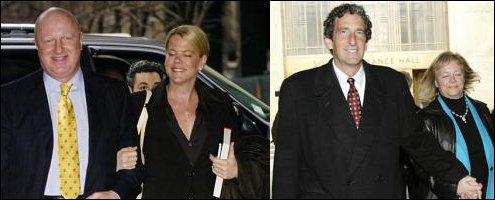
The corruption trial of two former Tyco International executives ended in a mistrial last Friday after an apparent holdout juror received a threatening letter, leaving the judge with "no choice" but to halt the 12-day-old deliberations.
The juror, who last week appeared to give defendant Dennis Kozlowski an approving hand signal, had received the letter in the previous 24 hours, courtroom sources said.
State Supreme Court Judge Michael Obus, visibly upset and with a quaking voice, said it was a "shame" the judicial process could not be protected.
"I have no choice but to grant a mistrial," Obus said, citing "outside pressure" on one juror. The mistrial ended a six-month-long trial for Kozlowski, Tyco's former chairman, and Mark Swartz, its ex-CFO, who were accused of looting the conglomerate of $600 million in one of the biggest corporate corruption cases in U.S. history. Manhattan District Attorney Robert Morgenthau said his office would seek a retrial.
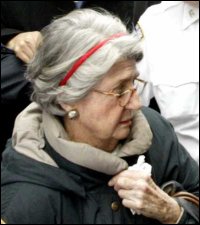 Defense attorneys sought a mistrial all week, arguing that media exposure of the juror, 79-year-old Ruth Jordan, prevented the panel from reaching a fair verdict. The retired teacher and lawyer sparked the controversy last week when she made what was widely reported as an "OK" hand gesture toward the defense.
That followed jury complaints to the judge about a "poisonous" atmosphere in the deliberation room. Jury notes indicated most panelists were leaning toward guilty verdicts.
"My greatest interest is, and always has been, to do the right thing in my role as a juror in this case," Jordan said in the statement. "I do not know that I could express additional views at this time. After Jordan's identity was revealed by the media, she became the topic of scathing Internet chatter, and one source described the letter she received as threatening.
But, in a Reuters piece that explains some of the dynamics at work that caused the mistrial, excerpted below, the jury supposedly rallied around Jordan:
- When an elderly juror in the corruption trial of former Tyco International Ltd. executives was mocked by a newspaper, the rest of the panel rallied around the 79-year-old woman who once baked the group a carrot cake.
The jury put aside bickering and harsh feelings toward juror No. 4 Ruth Jordan, said Mark Glatzer, a juror in the case, who talked to Reuters on Saturday evening.
In addition to its front-page sketch of Jordan, the Post joined the Wall Street Journal in printing her name, which is seen as taboo in the United States, and called her a "batty blueblood" in a second story.
"She's 79 years old and she's on the front page of the Post, which is making fun of her," Glatzer said. "Juror No. 7 called me and other jurors and told us to call Ruth and give her support. I was horribly worried for her."
The six-month trial ultimately collapsed on Friday when New York State Supreme Court Judge Michael Obus declared a mistrial. Obus cited "outside pressure" on Jordan who received a letter that had unnerved her. She had also received a threatening telephone call after newspapers reported her name and that she was on the jury, Glatzer said.
He said jury deliberations were a free-for-all from the very start. Jordan frustrated the group by constantly shifting her arguments or voting guilty on a count only to change her mind later.
"She was just dancing around," Glatzer said. "Tempers flared and people said things they wished they didn't say," Glatzer recounted. "(Jordan) could hold her own."
After Jordan's identity was disclosed, she returned to the deliberations room with a change of heart.
"She said she realized that maybe her opinion of reasonable doubt was too strong and she was willing to change it," Glatzer said. "And she said she was going to vote guilty on (a grand larceny count)."
Jordan's shifting stance unsettled Glatzer. He said he feared she was voting guilty because she had been terrorized by the media coverage. He then changed his guilty vote to an abstention on the grand larceny count that accused Kozlowski and Swartz of making a secret $20 million payment to a director.
"It was not a winning situation. It was insane," he said.
Swartz's attorney Charles Stillman said: "I've been doing this 40 years. I tell you, if I piled up all the experiences top to bottom, I ain't seen nothing like this yet."
Juror Peter McEntegart told CNN the panel had been on the verge of a verdict. "We virtually had a verdict yesterday afternoon," he said, but the panel opted to return on Friday for what they thought would be another few minutes of deliberations. "We thought it would be another 10, well, nothing takes 10 minutes in this trial, but half-hour or an hour and we would have been done," he said. Instead, he said, "we literally were not allowed to deliberate today at all."
Juror Adrienne McWilliams told New York's WABC radio that Kozlowski and Swartz would have been found guilty on some counts but not others. Experts said the ruling was a setback for prosecutors, who levied a 32-count indictment accusing the pair of securities fraud, grand larceny and corruption. But while the defense now has the advantage of having heard the evidence, the 11-to-1 jury split could push the defense toward a plea deal.
Kozlowski and Swartz built Tyco into one of the world's largest conglomerates by buying hundreds of companies, and the case was considered a pivotal prosecution in the wake of other U.S. corporate scandals, such as Enron and WorldCom, as well as Martha Stewart's high-profile conviction only days ago.
The judge warned that the media's public mockery of the 79-year-old schoolteacher, Ruth Jordan, could deter citizens from serving on juries. Disappointed jurors said they had been on the verge of delivering several guilty verdicts. The government accuses the two executives, L. Dennis Kozlowski and Mark H. Swartz, of stealing $600 million from the company. In the second trial, prosecutors are expected to focus less on the executives' lavish lifestyles and more on their criminal intent. Kozlowski and Swartz still face tax-evasion charges and multiple civil suits from Tyco and Tyco shareholders after the retrial.
But, both the prosecution and defense should welcome a new trial. The media - the Wall Street Journal and New York Post - was the real culprit in identifying Ruth Jordan, but her behavior probably warranted a mistrial anyhow. Despite the executives' greed, the prosecution shouldn't be focusing there - criminal intent is the real issue and proving that the next time around will ensure these two won't get off more lightly than they should.
- Arik
 "Competitive Intelligence applies the principles of competition and lessons of intelligence to the need for enterprise awareness and predictability of market risk and opportunity. CI has the power to transform an enterprise from also-ran into real winners with agility enough to create and maintain sustainable competitive advantage."
