November 29, 2003
Aurora Helps with Christopher Reeve Paralysis Foundation Benefit Basketball Tournament

Today was an event all of us at Aurora have been thinking about, anticipating and looking forward to for the past few weeks, as my brother, Derek Johnson (who runs Aurora's research & analysis business) helped organize (with Charley Anderson, an Aurora alumnus, curiously enough) the Inaugural Friends of David Busta Basketball Tournament to Benefit the Christopher Reeve Paralysis Foundation.
 The day was great fun - I made a step forward in my food-service career by volunteering in the snack bar, while Derek, Charley and about 60 other guys played three forty-minute basketball games. I think they were all pretty tired out. (I didn't play because I didn't want to show off... er, well anyhow, with all that throwing and running and stuff, I probably wouldn't have fared well.) The picture above is, left to right, Derek, David Busta and Charley - read the story in the local paper for more info:
David Busta basketball tournament great success
Busta Basketball Benefit is Nov. 29
First annual David Busta Basketball Benefit
It was a great success in the end - over $16,000 raised to help fund spinal cord and paralysis research. And, that's enough to make any big brother - or boss - awfully proud. ;-)
- Arik
November 28, 2003
Black Friday: Only 26 Shopping Days ‘Til Christmas

If there was any doubt that Christmas shopping season was underway today, then you weren't out shopping at 5:00 AM like the rest of us. Just a brief selection of articles for you today below, as I recover from my triptophan overdose from yesterday. Here's an excerpt, followed by some fun story links:
-
Heavy purchases of digital cameras, toys, clothes and more ignited the holiday shopping season over the weekend and bolstered projections for it to be best in five years.
Items were snapped from shelves early as many stores opened their doors by 6 a.m. Friday for the official start of the holiday shopping season. The steepest discounts ran until noon.
Sales for the first day of the season were $7.2 billion, up 5% from Black Friday last year, according to ShopperTrak. The day after Thanksgiving is dubbed Black Friday because many retailers see their balance sheets shift from red to black during the holiday shopping season.
"It was a very pleasant surprise that demand was as strong as it was on Black Friday," says ShopperTrak retail consultant Michael Niemira, citing reports that full-priced merchandise did well. "That is really a vote of confidence by the consumer that the 2003 holiday season is likely to be one of the best in years."
Consumers are loosening the grip on their wallets because of the improved economy, lower interest rates and an upswing in the stock market.
Wal-Mart, the world's biggest retailer, posted record sales on Friday, topping $1.5 billion at U.S. stores compared with $1.4 billion last year on Black Friday. Its top selling categories were home electronics, small appliances and toys, say officials at Wal-Mart, which has 3,500 stores in the USA.
Visa USA, the nation's largest consumer payment system, reported total U.S. spending on Visa credit and debit cards for Friday and Saturday was $6.5 billion, up 12% vs. the same days last year.
Most retailers will disclose results for the Thanksgiving weekend when sales totals for November are released on Thursday.
Early bird shoppers had to arrive at stores before the doors opened. Many items — such as color TVs at Circuit City for $89-$120 and $29.87 DVD players and $498 HP Pavilion desktop computers at Wal-Mart — sold out in minutes.
Holly Register, 49, of Suffolk, Va., arrived at Chesapeake Square mall here at 6:05 a.m. in search of CD players for two of her daughters. She was lucky enough to get the slim wall-mountable systems that she wanted on sale for $79.99 at RadioShack. "I've scratched them off my list," Register says of daughters Elena, 14, and Masha, 12.
Lana Olson, however, took the risk of waiting for steeper discounts. The 53-year-old resident of Surry, Va., only bought gifts that had to be mailed soon to nieces and nephews.
While Black Friday has been the fourth-busiest shopping day of the year, Monday is expected to be the busiest day for online retailers. Consumers returning to work will use high-speed connections at the office and search for what they could not find in stores.
Online sales are expected to soar 42% during the holiday season to $12.2 billion, according to Forrester Research.
- Marketers Fire Up for the Holiday Season
- Discount Retailers Battle for Traffic
- Consumers Buying as Much as Last Year
- Bargain Shoppers Seek Holiday Specials
- Woman Trampled in Wal-Mart Stampede
- Early Bird Specials Woo Bargain Hunters
I was particularly appalled/interested in the Wal-Mart-woman-trampled story - although late-breaking news has it, she's done this before, so I'm holding back judgement.
- Arik
November 27, 2003
The Atkins Economy: Low-Carbs as a Competitive Differentiator in the Food & Restaurant Industry
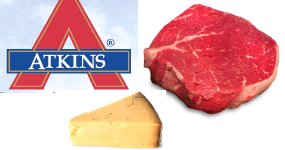 Since it's Thanksgiving, I thought it'd be fitting, as we're all about to overeat, to think of the country's greatest - and arguably most successful, in terms of net pounds lost - diet trend and its effects on the economy. The Atkins Lifestyle has become more than just a trend. If you love to eat beef, you know it's gotten a lot more expensive of late, and so have a host of other high-protein, low-carb foods. Meanwhile, Unilever - parent company of Slim-Fast - is blaming Atkins for a 21 percent fall-off in profits for the competitor. Likewise, there are a lot of companies taking advantage of the Atkins Economy - here's an exceprt from another BrandChannel piece on the subject:
-
As frustrated consumers warm to low-carb diets, food, beverage and restaurant brands have been right behind them. Big brands including Heinz, McDonald’s, PepsiCo, KFC, Coors and Hain Celestial Group either have just plunged into this marketplace or are making plans to do so soon, joining early committers such as Anheuser-Busch, with its hot-selling Michelob Ultra beer, and an array of small companies that have been feeding the trend for years. Sales for low-carb specialty-product companies such as Atkins Nutritionals Inc. are spiraling skyward, as is the low-carb business of Internet-based diet-plan companies such as eDiets.com.
On the flip side, the rising low-carb tide has buffeted major food companies, such as Kraft, that haven’t acted quickly enough to come along. It has taken the air out of once high-flying diet brands such as Slim-Fast, which are based on old trends of weight loss. And it has stunned entire segments of the food business that are carbohydrate-based, such as baked goods, pasta and orange juice.
"A lot of people believe in it, and [low-carb diets] certainly have had results in terms of weight loss for a lot of people," says Steven Reinemund, chairman and CEO of PepsiCo Inc. The Purchase, New York-based giant plans to launch new and reposition existing products into the low-carb segment as early as next year, says Reinemund.
"We’re not in business to tell people what’s right and wrong in terms of personal commitment to health programs," Reinemund continues. "But if they want low-carb alternatives, we want to make sure we have those alternatives in our portfolio. […]We do have programs in all of our businesses to capitalize on what we think is a trend."
Beverage-industry consultant Tom Pirko says that "the low-carb thing is being driven by successful products and by a lot of media coverage. It has the biggest consumer-consciousness badge in the industry right now, and companies see that."
Sam Rovit, food-industry partner for the consulting firm Bain & Co., says that low-carb has demonstrated such great appeal because it’s a relatively simple dieting message, similar to the low-fat mantra of several years ago. "People have always said, ‘Eat in moderation, and balance food groups,’ but that’s complicated -- it’s not an easy sound bite," he says. "But just saying ‘low-carb’ is an easy sound bite. People think, ‘I can follow that: Just cut out pasta, bread and beer.’ "
Yet not surprisingly for a trend that has moved so far, so fast, some food-company players and independent analysts already are hedging their bets about the staying power of the low-carb category, a major factor in corporate decisions about whether to opt in.
"Established food brands have to be very careful about this," says Julian Mellentin, editor of New Nutrition Business, a global trade journal. "They want to be opportunistic enough to take advantage of what mileage there is in chasing this low-carb phenomenon. But they have to be careful that they don't follow their opportunism over the cliff. And I don't think the good ones will."
While McDonald's Corp., for example, seems to have begun reversing its marketplace slide of the last few years in large part on the strength of new, better-for-you products such as salads, the brain trust of the Oak Brook, Illinois-based fast-food leader remain skeptical of the low-carb phenomenon. "[W]hen customers start telling us that this is what they want, and we start seeing levels of that interest rise, we'll start doing something about it," says Ken Barun, the corporate vice president whose bailiwick includes "healthy lifestyles." "But we haven't seen customers doing that yet; there's no groundswell."
- Arik
November 25, 2003
Colgate vs. Crest: Round One in Fast-Growing Tooth-Whitener Market

I've always thought that "too white" look on a person's teeth was a real clue the person was posing hard, but apparently not everyone agrees with my specious opinion of teeth that glow in the dark.
Call it the "War of the Whiteners" - Colgate is suing P&G, joining a trend among P&G's consumer product competitors lately for "false advertising over ads that mention Colgate's Crest dental products, adding to a growing number of lawsuits as P&G mounts more aggressive ads that specifically target its rivals." Here's an excerpt:
-
Colgate-Palmolive Co. sued Procter & Gamble Co. Monday, alleging P&G is misleading consumers with new advertising comparing the companies' do-it-yourself tooth whitening products.
The federal suit accuses P&G of lying in commercials that say its Crest Night Effects and Crest Whitestrips products are "clinically proven" more effective than Colgate's Simply White Night and Simply White products.
New York-based Colgate also claims P&G used questionable measuring tactics to reach results showing its products make teeth several times whiter.
The suit, filed in U.S. District Court in Manhattan, seeks unspecified damages and asks a judge to order P&G to pull the advertising - including TV ads, newspaper inserts and cardboard coffee-cup holders.
Colgate claims the advertising risks "substantial and irreparable harm, including a loss of consumer confidence, loss of goodwill and lost sales, and could well destroy Colgate's tooth whitening business."
A spokeswoman for Cincinnati-based P&G did not immediately return a call for comment.
The two conglomerates are the nation's top two makers of tooth-whitening systems, which have gained popularity since hitting the U.S. market three years ago.
Here's another one:
-
Colgate on Monday filed the lawsuit in U.S. District Court in New York claiming that P&G advertisements for its Crest Whitestrips and Night Effects tooth whitening products put Colgate's Simply White products "in a bad light," a Colgate spokeswoman said on Tuesday.
The spokeswoman could provide no other details. A P&G spokesman said the claims made in its advertisements were accurate.
"We take great care to make sure that our advertising is accurate and supportable and we will vigorously defend our advertising," Bryan McCleary, a spokesman for Cincinnati-based P&G said.
While the lawsuits might in part be a strategy by competitors to defend their turf against new P&G products, they also could be the result of P&G being more aggressive in how it advertises, Joseph Altobello, analyst at CIBC World Markets, said.
"I think this is part of an ongoing strategy on the part of P&G to not only push the envelope on the part of some of their advertisements, put to also point out the differences between their products and those of some of their competitors," Altobello said of the advertising.
In May a federal jury awarded $2.96 million to Playtex Products Inc., maker of Tampax, after finding that P&G falsely advertised its new Pearl tampon.
In September, Johnson & Johnson-Merck, makers of Pepcid AC heartburn medication won an injunction that made P&G drop the slogan "one pill, 24 hours, zero heartburn" from ads for its Prilosec OTC heartburn medication. Johnson & Johnson Merck, a joint venture between drugmakers Merck & Co. Inc. and Johnson & Johnson, had argued that Prilosec OTC can take up to four days to take full effect.
The company also lost a lawsuit filed by Kimberly-Clark Corp. over an ad for Pampers diaper product that implied Kimberly-Clark's Huggies Pull-Ups could be removed by the toddlers wearing them. P&G also faces a lawsuit filed by Georgia-Pacific Corp. over ads that show P&G's Bounty paper towels absorbing more liquid than Georgia-Pacific's Brawny towels.
Companies in general have also been more willing to go to court lately to fight advertising disputes instead of through the National Advertising Division of the Better Business Bureaus, the industry self-regulator, Linda Goldstein, head of the advertising practice at lawfirm Manatt, Phelps & Phillips, said.
"I think in part that's a function of the market place and the competition becoming much more severe and much more aggressive," Goldstein said.
So, it seems the only way to compete with P&G in any market is to just sue 'em for false advertising... or maybe it's P&G that should reel-in its claims, unless it can prove their results... which so far, seems to trend toward doubtful.
- Arik
November 24, 2003
Big Pharma Giving Thanks for Medicare Turkey: Seniors Get Stuffed, Canadians Refute FDA Drug Quality Complaints
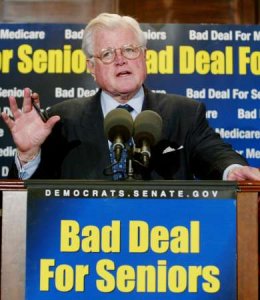 The Medicare drug benefit, which will really only "benefit" pharmaceutical companies in its current form, is the subject of debate on Capitol Hill today as it appears the government will be barred from negotiating drug prices with big pharma:
-
With Congress poised for final action on a major Medicare bill this week, some of the fiercest debate is focused on a section of the bill that prohibits the government from negotiating lower drug prices for the 40 million people on Medicare. That provision epitomizes much of the bill, which relies on insurance companies and private health plans to manage the new drug benefit. They could negotiate with drug companies, but the government, with much greater purchasing power, would be forbidden to do so.
Likewise, last week in Canada, Diane Gorman, the assistant deputy minister in the federal health department, met in Ottawa with Mark McClellan, the commissioner of the U.S. Food and Drug Administration. "Canada's safety record is second to none internationally," she said, as the Canadian government said that there was no evidence that drug exports had violated Canadian laws or jeopardized the health of Americans, soundly defying a request by the Food and Drug Administration to clamp down on exports of cheap drugs to the United States.
Because the same prescription pharmaceuticals in the U.S. are 30 to 50 percent cheaper in Canada, naturally, there are a lot of Americans buying their drugs from the 140 or so Canadian pharmacies shipping to the U.S., despite threats against the practice by drug makers. So, at the same time that Big Pharma is threatening – apparently unsuccessfully – to restrict exports of drugs to Canadian distributors selling to mail-order pharmacies, U.S. Senator Ted Kennedy is attempting to get enough senators on board to filibuster against the attempt to scuttle Medicare’s ability to negotiate drug prices.
Here’s an excerpt:
-
The cross-border trade has become a divisive political issue, pitting pharmaceutical manufacturers and many traditional pharmacists against consumer groups.
In the United States, House and Senate negotiators earlier this week rejected proposals to let consumers import lower-cost prescription drugs from Canada and other countries as part of the bill creating a Medicare drug benefit. On the other hand, several state governors and local politicians are pushing for greater freedom to import cheap medications.
The Canadian government has taken the view that its priority is to ensure safe drugs for Canadians. Last month, the health department asked medical and pharmaceutical groups to notify it of any drug shortages or other supply anomalies. "At this stage, we don't have evidence of Canadian law being broken," Ms. Gorman said at a joint news conference with Dr. McClellan.
Several drug makers have begun rationing supplies to Canadian pharmacies in the hope of curtailing the cross-border trade. The Canadian subsidiaries of at least four companies have also announced price increases of 4 percent to 8 percent.
Dr. McClellan praised Canada's drug approval process, but said that "it's not a system that's designed to handle the large flows of drugs to Americans."
He said he was concerned at the potential for unapproved and mislabeled medications to be imported from Canada, and the difficulty of enforcing drug recalls north of the border in the United States. According to Dr. McClellan, Internet pharmacies have recently sprung up that claim to be based in Canada but do business from another country using a Canadian domain name. "Our focus is on safety for Americans," he said.
Citing cooperation between the F.D.A. and more than 20 states in improving drug safety, Dr. McClellan expressed the hope that the Canadian health department would "provide more leadership" in dealing with other levels of government in Canada. Manitoba Province has encouraged Internet drugstores to attract investment and to create jobs.
Earlier, Dr. McClellan and Ms. Gorman signed a memorandum of understanding intended to improve collaboration between American and Canadian drug regulators. While Dr. McClellan described the agreement as "a bridge to span the regulatory gaps that separate us," Ms. Gorman said the deal was aimed mainly at sharing information.
Ms. Gorman said that while she "acknowledged and respected" the American government's concerns about the fast-growing importation of drugs from Canada, "our health care system is a defining characteristic of who we are as a nation."
In a speech to the Drug Information Association here, Dr. McClellan expressed concern about the prevalence of every-country-for-itself drug policies. Keeping drug prices artificially low, Dr. McClellan said, lessened the incentive for innovation by drug manufacturers. He said rich nations should "fairly share the costs, not just the benefits, of new drugs."
- Arik
 "Competitive Intelligence applies the principles of competition and lessons of intelligence to the need for enterprise awareness and predictability of market risk and opportunity. CI has the power to transform an enterprise from also-ran into real winners with agility enough to create and maintain sustainable competitive advantage."
