November 14, 2003
Victoria’s Secret Holiday Fashion Show Hottest Ticket in Town

Last night’s Victoria’s Secret Fashion Show proved to be the hottest ticket in New York, with market values around $12K – despite the "Non-Transferable" warning stamped on the face. For those of you not lucky enough to get one of the six hundred odd exclusive invites, it’s airing on CBS on Wednesday 19 November at 10:00 PM Eastern (after the kiddies have gone to bed), with highlights posted to the Web.
Unlike in years-past, when the world (and the Web) ground to a halt to watch the show, this year’s event comes on the heels of last month’s announcement that the company’s Web site made it possible to view which garter belts, camisoles and other intimate apparel some of its customers had on their shopping lists – a major invasion of privacy – particularly for that market segment consisting of cheating husbands sending their mistresses new lingerie.
But, the cost of the flap was more in terms of bad PR than real money – New York Attorney General Eliot Spitzer fined the company $50,000 and forced VS to refund customers, after the error violated the company’s privacy policy.
- Arik
November 13, 2003
Burberry’s Signature Check Hijacked by Tribal Hooligans Clad in Plaid
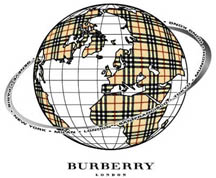 If you’re unfamiliar with Burberry’s signature check, then you’re not very well-schooled in the fashion world, as the brand has become fantastically popular of late.
But as I read in this interesting story from The (Glasgow) Herald, Burberry has earned taboo status in bars and nightclubs throughout Scotland and, increasingly, in England and Ireland as well. While it might appear the company has no control over who might decide to clad themselves in plaid, it looks like a bit of shortsighted product strategy to me:
-
…efforts by Rose Marie Bravo, the brand's chief executive, to make the label more accessible may be fuelling a Burberry backlash, as an increasing number of bars, restaurants, and nightclubs across Scotland ban its designs.
Previously aspirational – it was good enough for Audrey Hepburn in "Breakfast At Tiffany's", the 1961 cinema classic, while Daniella Westbrook, the actress, and her child were pictured wearing matching Burberry outfits – the brand has evolved into an anarchic uniform adopted by football hooligan culture and other troublemakers. Like Aquascutum, Evisu, and Stone Island, Burberry has fallen foul of tribal hijacking – the moment when a brand becomes the badge of belonging to a particular group that is not part of its target market. An Internet joke doing the rounds described a Burberry-clad Mini Metro as the ultimate car for Glasgow neds.
Earlier this year, Nick Griffin, the BNP leader, was pictured arriving at a local council election count in Oldham flanked by two minders wearing Burberry baseball caps, while it has been increasingly adopted by English football hooligans. As a result, some venues have introduced a complete ban on the fashion item, while others have a discretionary admission policy.
It would appear that perhaps Ms. Bravo’s attempts to evangelize the brand by emancipating its baser clientele is beginning to erode a venerable market position and is ultimately having an affect on the brand’s exclusivity among its most desirable customers.
- Arik
November 12, 2003
Technology Sector Recovery Means Half of IT Vendors Will Disappear
Gartner came out this morning at its Tech Investor Summit in New York and said that IT spending is getting better, but that half of the companies in the technology sector today will be gone in two years, as victims of consolidation.
One other factor that will affect buying behavior will be the evaporation of competitive pricing as well, as competition actually diminishes, rather than grows more robust, and a turnover in tech skills is likely to affect millions of workers:
-
"We are now seeing a true recovery in the making," said Al Lill, Gartner group vice president, in a statement. "There is a key combination of technology advances, architectural changes, market forces and best practices in place to lead a good recovery for IT in the near future and culminating in very strong growth in the longer term." The next two years will see a minimum of strong single-digit growth over this year's levels.
The current trend of consolidation will continue, leaving the IT industry in the hands of a few powerful players in the next two years, Gartner said. These players will regain their pricing power, after a period in which companies have been forced to slash prices to drive sales. In the PC industry, low prices have fuelled a boom in mobile products such as laptops and wireless equipment.
For tech workers, the recovery will mean a tremendous skills shift possibly affecting millions of people, Gartner predicted. The most valuable skills will include broadband, wireless, Linux, content management, data mining, security and business intelligence.
- Arik
November 11, 2003
General Motors Car Design Piracy Problem Getting Bigger in China…
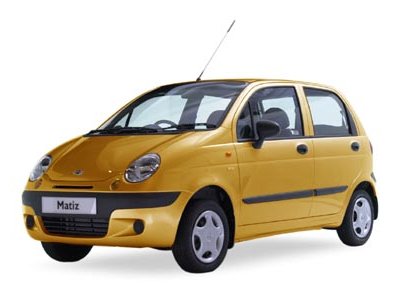
… and that’s with their joint venture partners! GM is finding it increasingly difficult to combat apparent piracy of its automotive designs in China these days, as the Financial Times story I discovered outlines. Making matters worse, it’s joint venture partner owns 20 percent of the pirate! Since the China market is the fastest-growing in the world, everyone is eager for a piece of the action and Chery, the accused, apparently thought GM had a winning design in the Matiz and the Magnus. Here’s the excerpt from the article:
-
General Motors, the world's largest auto company, is investigating the possible pirating of a second of its models by Chery, a fast-growing Chinese carmaker based in central Anhui province. The passenger car under scrutiny is the Magnus, a brand developed by a South Korean unit of the US company, GM Daewoo Automotive & Technology. "It has been brought to our attention that another car coming out of Chery looks similar to one of the GM products," a spokeswoman for GM China said yesterday. The Chery model being examined is believed to be the Oriental Sun, which was launched in July.
GM China has already said it is investigating another Chery vehicle released earlier this year, the QQ, which bears a striking resemblance to a GM mini-car called the Matiz, also produced by Daewoo. GM has just started producing its version of the Matiz in China, rebranded as the Chevrolet Spark. The alleged piracy of Daewoo designs is an especially sensitive issue, as GM's main joint venture partner in China, the Shanghai Automotive Industry Corp, is also a 20 per cent shareholder in Chery.
SAIC executives last month said the Chery problem would be resolved "soon", but did not comment on reports it had long been planning to sell its stake in the Anhui company. Any negotiations to sell the 20 per cent stake is complicated by the fact that the sale would involve the ultimate owners of Chery and SAIC - the governments of Anhui and Shanghai respectively. Chery declined to make an official comment yesterday, but a brand promotion manager in Shanghai said the company had been "subject to some irresponsible speculations and attacks".
"In our design, we mainly rely on ourselves, and learn some good points from international resources," the manager said. Chery previously denied it stole the mini-car design, but on its website has defended its practice of absorbing the "good features" of rival car products during its development phase as a company. Chery, founded in 1997, was one of the success stories of the China car market last year, selling about 50,000 vehicles, a 79 per cent year- on-year increase.
Obviously, all this competition in the Chinese auto market is a good thing – especially for consumers. However, VW, the dominant manufacturer in China these days, is likely to suffer the most in the next few years, as pricing power evaporates and competition heats up in auto pricing. VW realized 80 percent of its global profits from the China market in the past year.
- Arik
 "Competitive Intelligence applies the principles of competition and lessons of intelligence to the need for enterprise awareness and predictability of market risk and opportunity. CI has the power to transform an enterprise from also-ran into real winners with agility enough to create and maintain sustainable competitive advantage."
